 Skip to content
You lost the last bid. Not on price.
The procurement team Googled you and didn't like what they found.
Here is what happened. A procurement officer opened a browser. Typed your company name. Got a LinkedIn page with 200 followers, a website that didn't match the proposal, and zero results in ChatGPT. The competing bid had a Knowledge Panel, structured press mentions, and AI citations across three platforms.
Your proposal went to the bottom of the pile. Not because you were less qualified. Because the verification systems couldn't confirm you were qualified at all.
This is not a branding problem. This is not a content problem. This is a structural gap in how your company exists across the systems that decide who gets shortlisted.
What most companies build vs. what verification systems read
The visible work (blog posts, social media, ads) is the smallest part of what matters. Below the surface is where institutional legibility lives.
Above the surface (what most companies build): blog posts, social media, ads, directory listings, content calendars. Below the surface (what verification systems read): structured identity data, verification loops, institutional references, professional registries, publishing records, government registrations, trademark records, structured press documentation, AI training data signals, cross-platform entity linking.
Campaign-based marketing vs. infrastructure
Campaign-based marketing grows linearly and resets with every algorithm update. Infrastructure compounds. Drag the slider to see the difference over 24 months.
Interactive chart comparing campaign-based marketing (which drops during algorithm updates and grows linearly) versus entity infrastructure (which compounds exponentially and is unaffected by algorithm changes). By month 24, infrastructure achieves approximately 95% institutional legibility versus 30% for campaigns.
Disconnected fragments vs. verified network
Most companies have profiles scattered across platforms with no connection between them. Entity infrastructure connects every node into a verification network where each element confirms the others.
Click to connect them.
Interactive visualization showing company identity nodes (website, LinkedIn, government registry, Wikidata, professional registry, publishing record, industry directory, trademark office) as disconnected fragments, which connect into a verified network when entity infrastructure is built. Each node verifies the others.
This is what it costs
All essaysWe Lost a Contract Because a Procurement Team Googled Us
The structural gap that cost $200K. What was missing, what the competitor had, and how the infrastructure could have been built in 90 days.
14 min read Due DiligenceHow to Pass Digital Due Diligence: The Entity Infrastructure Approach
What enterprise buyers, investors, and procurement teams check before the first meeting. The verification hierarchy most companies fail.
15 min read StrategyWhy SEO Isn't Working for Your B2B Company
Traditional SEO was built for a keyword-matching engine. Google is now an entity-verification engine. The approach needs to change.
15 min readWhat I build
Institutional legibility infrastructure. The structural layer that makes your company verifiable across every surface a buyer, partner, or AI system checks before making a decision.
Not content marketing. Not advertising. Not monthly reports with green arrows. Infrastructure. Built once, maintained annually, compounds indefinitely.
What I do not deliver
- Monthly blog posts
- Backlink packages
- Keyword reports
- Content calendars
- Social media management
- Dashboards with green arrows
What I build instead
- Structured identity data across all verification surfaces
- Closed verification loops (every profile confirms every other)
- Institutional reference network documentation
- Professional registry entries with cross-links
- Publishing records with permanent identifiers
- Documented build log you own forever
Engagement tiers
Each tier is scoped to the complexity of your entity network. No two builds are identical.
Single Entity Build
12 weeks. One company, one principal. The structural layer that makes everything else compound.
- Complete entity audit across all verification surfaces
- Structured identity data deployment (Person + Organization schema)
- Verification loop closure across 10+ platforms
- Professional registry entries and cross-links
- AI legibility baseline measurement (before/after)
- Documented build log delivered at completion
- 12 months of quarterly monitoring included
Infrastructure + Content
12 months. Everything in Foundation, plus the content layer that turns infrastructure into institutional weight.
- Everything in Foundation
- Expert writer embedded: 24 institutional-grade articles
- Publication pipeline (book or whitepaper with ISBN/DOI)
- Speaking record documentation and event positioning
- Media mention acquisition and press documentation
- Institutional affiliation mapping and formalization
- Knowledge Panel qualification program
- AI citation monitoring across ChatGPT, Gemini, Perplexity
- Monthly entity health reports with competitive benchmarking
- 24 months of maintenance included
Multi-Entity Network
12-18 months. For holding companies, groups with subsidiaries, or organizations with multiple principals who each need verified identity.
- Everything in Authority, per entity
- Multi-entity verification network (parent + subsidiaries)
- Cross-entity referencing and ownership graph
- Key personnel entity builds (C-suite, directors)
- Unified institutional narrative architecture
- Board-ready entity infrastructure documentation
- Dedicated project manager
- 36 months of maintenance included
Why I build this
Engineering, craft, and digital infrastructure look like different fields. They use different tools, serve different markets, operate on different timescales. But the underlying system requirement is identical: build something that functions under load, holds over time, and can be verified by someone who wasn't there when you built it.
Three interconnected domains orbit a central "Systems Thinking" core. Engineering (pump systems, fabrication, tank cleaning, commissioning, safety protocol) connects to Craft (leather work, bookbinding, conservation, material science, hand tools) through material integrity. Craft connects to Digital (entity infrastructure, schema, verification, AI visibility, documentation) through documentation. Engineering connects to Digital through verification.
Three domains, one structural requirement. The skills transfer because the system logic is the same.
Domain 1
Engineering
Pump systems, tank cleaning, fuel polishing, custom fabrication. Full lifecycle from site survey to commissioning. Through PT Witanabe Integrasi Indonesia and PT Arsindo Integrasi Pompa (authorized ALBIN Pump distributor for Indonesia).
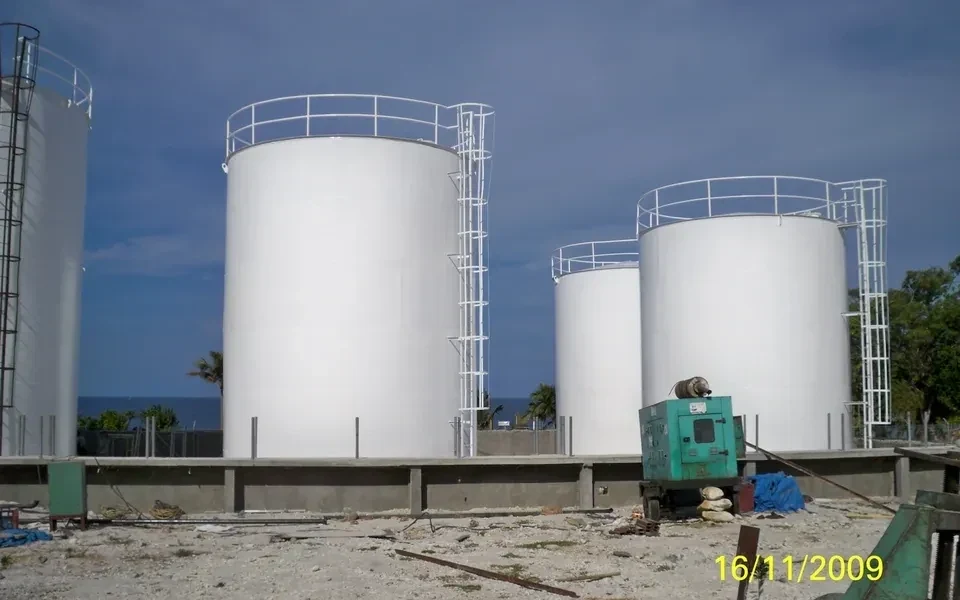
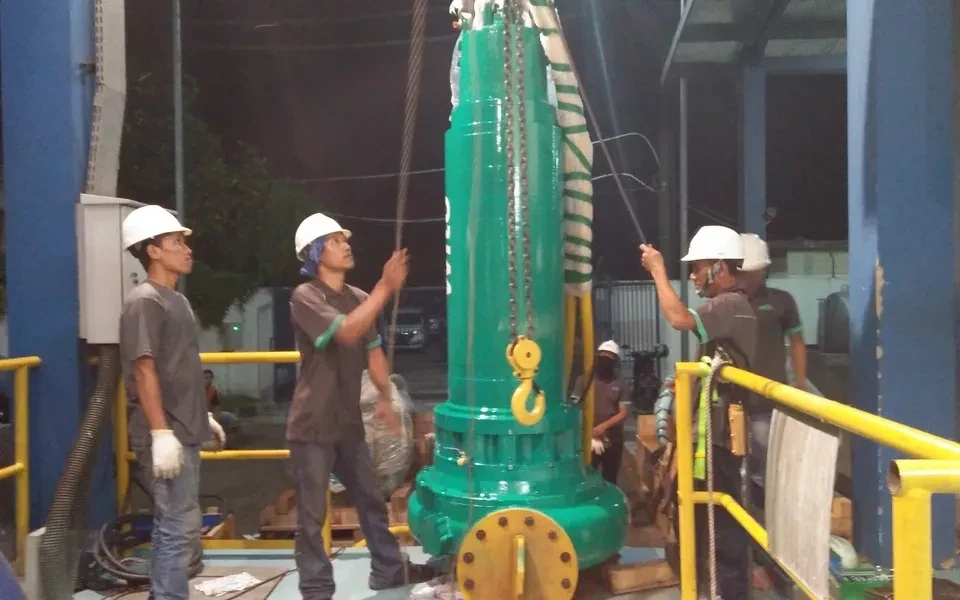
Why this matters for entity infrastructure: A client's fuel polishing system kept failing. Three contractors had worked on it. Each one optimized their component in isolation. The pump was fine. The filter was fine. The tank was fine. But the system failed because nobody designed the loop. I redesigned it as an integrated circuit: pump feeds filter, filter feeds tank, tank feeds back. Same principle as entity infrastructure. Your website is fine. Your LinkedIn is fine. But if nothing connects them into a verification loop, the system fails when it matters.
Domain 2
Craft
Handmade leather journals, book conservation, archival repair. Through PT Hibrkraft Kreasi Indonesia, from a Rp 20,000 leather scrap in 2010 to institutional supplier for EFEO Paris and KPK.




Why this matters for entity infrastructure: EFEO brought a 19th-century manuscript. The binding was fine. The paper was fine. But the adhesive connecting them had degraded. The visible parts looked intact. The invisible structural layer had failed. That is exactly what happens to companies online. The website looks fine. The LinkedIn looks fine. But the layer connecting them, the structured data, the verification loops, the institutional references, has degraded or was never built. Infrastructure is not the surface. It is what holds the surface together.
Conservation
Archival-grade repair for institutional and private collections. Cover replacement, rebinding, page repair, heavy dusting, full leather restoration.




Domain 3
Digital Infrastructure
Entity verification, structured identity data, AI visibility systems. The methodology I now build for clients: making companies machine-readable and verifiable across every surface procurement teams, AI systems, and search engines check.


Proof of concept: This site. I built the entity infrastructure first: ORCID, Wikidata, schema markup, verification loops across 10+ platforms. Content came later. 333 essays, 7 courses, 6 books. The order matters. Without the structural layer, all that content would be noise. With it, every piece compounds into institutional weight. The site itself is the methodology in action.
What the system looks like
Four layers, each feeding the next. Identity at the top, verification output at the bottom. Every node is a real platform, a real database, a real verification surface.
Entity infrastructure architecture showing four layers: Identity Layer (Website, Google Business, LinkedIn, Domain WHOIS), Corroboration Layer (Wikidata, Govt Registry, Industry Directories, Certification, ORCID), Authority Layer (Zenodo DOI, ISBN Books, News Mentions, Speaking Record, Case Studies, Trade Publications), and Verification Output (Knowledge Panel, AI Citations, Procurement Pass, Rich Results). Data flows downward through layers. Each layer strengthens the next.
Read the playbooks before the engagement
Procurement teams, finance directors, and operations leads who want to verify our thinking before booking a call can read the Operator's Handbook — a 50-book series of operations playbooks (20 shipped, 30 in production). The frameworks in the engagement are the same frameworks in the books. The books are written from the seat of someone who runs three companies. Most clients arrive having already read at least one.



Built for institutions you already know
 Pertamina
 Huawei
 Facebook
 Gojek
Gojek BKKBN
BKKBN Aetra
Aetra PUPR
PUPR Sucofindo
 Krakatau Water
Documented work across engineering and craft. Selected case studies →
Due diligence readiness check
- A procurement team cannot verify your company through structured data alone
- Your company profiles across platforms do not reference each other
- AI systems do not mention your company when asked about your industry
- Your institutional affiliations and credentials are not machine-readable
- Your entity data is fragmented: different names, addresses, or descriptions across surfaces
If two or more apply, your verification layer is not built yet.
Questions you are probably asking
We already have a website. Why isn't that enough?
A website is one node. A procurement team checks ten: government registries, LinkedIn, industry directories, AI systems, professional registries, trademark databases, press archives, Wikidata, business intelligence platforms, and your website. If nine of those ten show nothing or show conflicting data, the website is noise. Entity infrastructure connects all ten into a verification network where each node confirms the others.
Our competitors keep winning bids. What are they doing differently?
They may not be more qualified. They are more verifiable. When the procurement officer runs both names through the same systems, one company shows a Knowledge Panel, structured press mentions, AI citations, and consistent data across platforms. The other shows fragments. The verifiable company gets shortlisted. The other one competes on price.
AI chatbots don't mention our company. Is that a problem?
Yes. AI systems (ChatGPT, Gemini, Perplexity) are becoming the first surface people check. If a potential client asks "who are the top industrial engineering firms in West Java" and you are not mentioned, you have been filtered out before the conversation starts. AI systems build answers from structured data, verified entities, and institutional references. If you don't exist in those layers, you don't exist in the answer.
How is this different from SEO?
SEO optimizes pages for keyword ranking. Entity infrastructure makes your company verifiable as an entity across all systems, not just search engines. Keywords reset with every algorithm update. Entity data compounds. SEO agencies deliver monthly reports. I deliver infrastructure you own permanently. The outcome is different: not "page one for a keyword" but "recognized as a verified entity by every system that checks."
What if our company is already doing good work but nobody can find us?
That is exactly the problem entity infrastructure solves. The work exists. The verification layer does not. Start with a free entity audit to see what procurement teams and AI systems currently find when they check your company. The gap between what you've done and what systems can verify is where contracts get lost.
Resources
Start with an audit
Not sure where you stand? Request a free entity audit. I check what procurement teams, AI systems, and partners actually see when they verify your company. Written report, no obligation.
If your company is already doing the work but not being recognized for it, the problem is structural. Not creative. Not content. Structural.